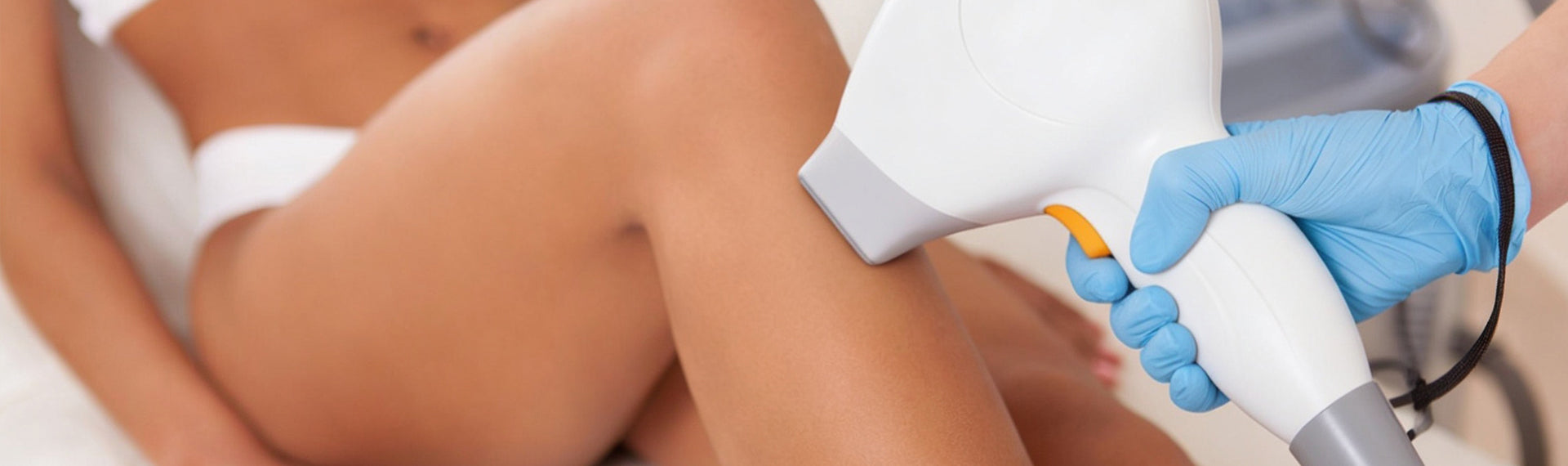
For a long time, laser hair removal was treated as something that simply did not work for darker skin tones. That is no longer true. Modern laser technology has changed what is possible, and people with dark skin can now achieve safe, effective, long-term hair reduction. What matters is understanding how the treatment works differently for darker skin, what the real risks are, and what to look for before you book.
Is Laser Hair Removal Safe for Dark Skin?
Why Dark Skin and Lasers Have a Complicated History
Early laser systems worked by targeting melanin, the pigment that gives hair its colour. The problem is that melanin is also what gives skin its colour. On lighter skin tones, the contrast between dark hair and pale skin made it straightforward for the laser to find the follicle without affecting surrounding skin. On darker skin, that contrast is much lower, and older lasers could not reliably tell the difference between melanin in the hair and melanin in the skin itself.
The result was that darker skin absorbed laser energy it was never meant to absorb. Burns, blistering, hyperpigmentation, and scarring were genuine risks with those early systems. The idea that laser hair removal is not suitable for dark skin is rooted in how the treatment worked twenty years ago, not how it works now.
Which Lasers Are Safe for Dark Skin?
Not all lasers are equal when it comes to darker skin tones, and this is the single most important practical point in this article. The key factor is wavelength. Longer wavelength lasers penetrate deeper into the skin, bypassing the melanin in the upper layers entirely and targeting the hair follicle below. Shorter wavelength lasers interact with surface melanin first, which is exactly where the risk comes from on darker skin tones.
At MedLaser Clinics, the Primelase HR system is one of the most powerful medical-grade laser platforms available anywhere. It is built to treat all skin types safely, including the deepest Fitzpatrick skin tones, using advanced diode technology with precise energy control and integrated cooling. The technology matters as much as the practitioner using it, and having the right machine makes a significant difference to both safety and results on darker skin.

What Are the Risks?
The risks are real, and any clinic that tells you otherwise is not being straight with you. Hyperpigmentation, where the treated area darkens after a session, and hypopigmentation, where patches of the skin lighten, are the two most common side effects specific to darker skin. Both happen when the laser interacts with surface melanin rather than the follicle, and both are significantly reduced when the right laser is used at the correct settings by a properly trained practitioner.
Burns and blistering can also occur, though these are rare with the correct equipment and technique.
The risk increases when energy settings are too high for the skin tone, when cooling is inadequate, or when the practitioner lacks specific experience with darker skin. Sun exposure in the weeks before treatment raises risk considerably, as tanned skin has elevated melanin levels that make the skin more reactive to the laser.
Patch testing before a full session is strongly recommended. It gives the practitioner a chance to assess how your specific skin responds to the laser settings before treating a larger area, and any reputable clinic should offer this without you needing to ask.
How Many Sessions Will You Need?
Darker skin typically requires more sessions than lighter skin to achieve the same level of reduction. Where someone with a light skin tone might complete a course in six sessions, someone with a deeper skin tone may need eight to ten or more. Lower energy settings are used per session to keep the treatment safe, which means each session does a little less work individually but with a much better safety profile overall. Intervals between sessions may also be slightly longer, giving the skin adequate time to recover fully before the next treatment begins.
What Results Can You Expect?
Significant, long-term hair reduction is genuinely achievable on dark skin with the right technology and a full course of treatment. Hair that returns after a completed course tends to be finer, sparser, and much slower growing than before treatment started. The difference between session one and session eight is dramatic for most clients, even if the early sessions feel like slow progress.
Very dark hair on very dark skin can sometimes present a lower contrast challenge even for advanced laser systems.
Results in this specific combination depend heavily on the laser used and how experienced the practitioner is at adjusting for it. A thorough consultation before committing to a course will give you a realistic picture of what to expect for your individual skin tone and hair type, rather than a generic promise that may not apply to your situation.